Writing in Outsports/SB Nation, Patricia Neil Warren explains that out Team USA football coach Pia Sundhage deserves more attention.
Aug 7, 2012 - USA 4, Canada 3. What a match! In the victory tumult that erupted after that last-second winning goal of the women's soccer semifinal, the beaming weathered face and silver-haired bob of USA head coach Pia Sundhage was poignantly visible on the little screen, as she made the rounds of her team, making sure each of the women knew how thrilled and satisfied she was.
For us LGBT people, it's an important moment to remember that the out coaches are as important as the out athletes.
So often the out coaches get listed as an afterthought, after the growing list of out LGBT athletes. And admittedly there are still not many out coaches around the world. Yet we have to recognize the undeniable influence that a good coach has over individual athletes and whole teams. Win or lose, the coach's input is always a turning point. They deserve more credit for what they achieve, not only on the playing field, but off it -- in terms of the growing acceptance of LGBT presence in sports.
Read the full article about out football coach Pia Sundhage.

Featured events

| 7-9 September 2012 Brussels Games Brussels  Learn more HERE. | 26-28 October 2012 QueergamesBern Bern, Switzerland  The success of the first edition of the QueergamesBern proved the need for an LGBT multisport event in Switzerland. This year will be even bigger, with badminton, bowling, running, walking, floorball. Learn more HERE. | 17-20 January 2013 Sin City Shootout Las Vegas  Learn more HERE. | 13-16 June 2013 IGLFA Euro Cup Dublin  Learn more HERE. |

Showing posts with label coaching. Show all posts
Showing posts with label coaching. Show all posts
Thursday, August 9, 2012


Saturday, July 21, 2012
My Gay Games story: Jim Atkinson, London
 |
| Jim Atkinson at Gay Games VI, Sydney (photo Outsports) |
I've known I was attracted to men since my very early teens growing up in Belfast, Northern Ireland. It was a household which took religion seriously, so the question of my sexuality was a continuing source of conflict and anxiety which I never shared with anyone. The idea of homosexuality was such an unsettling one that I simply had to find a way to diffuse the anxiety. Sport was my mechanism! My older sister was an international-level athlete who ran for Great Briatin, my parents played sport, and I had all the support I could have wanted in getting involved. I loved sport, I was quite good at it and, after all, homosexuals didn't play sport so no one could ever suspect me of being "queer," could they?
It was many years before I understood how absurd that idea was, but until my mid-twenties it was my defense mechanism of choice. The fact that I didn't have sex with anyone at all till I was 26 meant that the point was academic for many of these years!
To cut a long story short, I played field hockey at school and university, often captaining the side, and eventually became a national league player. I played tennis for my club, and squash at a good standard, but weightlifting became my passion.
I was always a small man, and weights allowed me to become a lot stronger and more powerful — even if not bigger! While completing my master's degree in Experimental Psychology, I "moonlighted" as an instructor in my gym, and the experience was crucial in making me want to coach sport. I loved the interaction with the trainees and I discovered the great rewards of helping people achieve their goals.
The gender of the trainees didn't matter. OK, I knew I was attracted to men (and eventually at 26 did something about it!) but it was the personal interaction which counted. It wasn't an excuse for being with cute men in workout gear!
It helps, of course, that my "take" on sport is almost entirely a "sex-free zone." I've never had much interest in the sort of "Locker Room" fantasy which many gay men enjoy. I've shared shower and locker rooms with literally thousands of naked men since I was 10 and never once felt the smallest hint of sexual arousal. I guess familiarity has completely defused and desensitised any erotic content!
Over a period of 30 years, I have qualified as a coach in field hockey, weightlifting, powerlifting and boxing, and in each of these sports I've been "out." Indeed, the most recent coaching in the Amateur Boxing Club was at their request. They had already made me secretary of the club, knowing I was gay, and they paid the fees for the 5-day course it took to become qualified. My partner Phil also boxes at the club and we simply couldn't have been made more welcome. Fitzroy Lodge is one of the biggest and longest established Amateur clubs in the United KingdomK and has produced many National Champions since it was founded in 1908.
Boxing also been the occasion of an amusing incident and one of the most interesting conversations I've had on the issue of gay sexuality. Two years ago I was with a party of Metropolitan Police and club boxers from London competing against the NYPD (we won!). While being driven round New York in an NYPD police truck, the London boxers and I discussed the issue of gay men parenting. I thought the NYPD officer driving the truck was going to crash! He seemed astonished at what we were discussing, very calmly and rationally, from my perspective as a gay man. Perhaps it's time to question easy assumptions about homophobia in a sport which is often referred to as a bastion of macho conservatism!
The journey from paranoid and closeted teen to openly gay man who played and coached sport on his own terms has been a truly liberating one, and the Gay Games has played its part in making the journey so rewarding. I owe the Federation of Gay Games a great deal — even though I had been "out" in sport for 15 years before I came to NYC in '94. Amsterdam in '98 and Sydney in 2002 just reinforced the positive feelings I have for the Gay Games — although two bronze, one silver and one gold medals obviously helped! To march into a packed Yankee Stadium in '94, together with a wonderful young wrestler from Philadelphia (who I had met that week and who is still a friend), me with my bronze medal, he with his silver, was such an overwhelming emotional experience that I can recall the tears I shed even now. Nothing in my sports experience over almost 50 years can match it!
But what of my experience as an 'out' gay sportsman, sports administrator and coach? Well, I have to report no great trauma, no confrontations, no rejection, no negative comments or overt homophobia. I know it exists. I've just never experienced it at first hand.
For me the rewards of coaching come not just from working with the very talented, but also those who came late to sport — like my long-time partner, Phil. He was even smaller than I as a boy and, as he now describes it at the age of 39, he hated sport with a passion. His physical education at school simply betrayed him. He wasn't good at ball games, hated team sports and was physically small.
Rugby was out of the question and cricket bored him witless. So he did nothing. It was only in his 30s, having hooked up with me, that he discovered that he is a talented runner, loves weightlifting (very strong for his weight) and has become an enthusiastic boxer. Where were the opportunities and the coaches to introduce him to these activities when he was in his teens and twenties? Nowhere to be seen.
My own regular sparring partner at the club, Minh, a Chinese guy in his mid-twenties, always wanted to box, never had the chance when he was younger and was physically small and a shy person. Now he is become a very talented boxer and his girl friend says he is a much happier and fulfilled personbecause of it.
I could go on and on. The thrill of helping people — especially those from unlikely backgrounds — to be the "best that they can be" in sport, is a huge motivation. I don't propose to give it up any time soon! I applaud the FGG and its dedicated volunteers for making a good experience of sport a reality for so many thousands. Long may it continue.
-- Jim Atkinson, London, 21 April 2005
Wednesday, July 11, 2012
"Sports play strong role in gay rights"

In June, [Pat] Griffin joined about 30 other leading activists at Nike’s headquarters in Oregon for the company’s first-ever summit to combat bullying and anti-gay bias and discrimination in sports.
“Athletes are leaders of a school and are highly visible role models,” Griffin said. “It’s a no-brainer to take a stand against that kind of thing for most people, certainly not all.”
Last week U.S. women’s soccer player Megan Rapinoe publicly acknowledged that she is gay in advance of growing coverage of this month’s London Olympics. The information added Rapinoe to the notable list of active female athletes who have made similar disclosures.
Griffin noted that the relative lack of coverage for women’s sports and existing biases about female athletes remove much of the impact that the same disclosure would have from an active male athlete in a major U.S. team sport. Still, it’s one more step in the right direction.
“I have more hope than I ever have had that we will change the culture of sport to make it a great place for everyone,” Griffin said. “There are so many more people who think this is an important issue and are actively involved in an effort to challenge homophobia in sport. It used to be a few lonely voices in the wilderness, but not anymore. The rate of change is just accelerating.”
Read in full HERE.
Friday, July 6, 2012
"Why women can't coach football": Title IX turns 40

Why Women Can’t Coach Football,
or Title IX Turns Forty
Forty years of Title IX is upon us, and with it has come a welcome review of the question of women and athletics. There is no question that this legislation was a game-changer. Women and girls participate in middle, high school and college sports in unprecedented numbers. The level of competition, skill and athleticism in women’s sports is significantly higher as well. In my own sport, rowing, Title IX has quite simply created a college rowing experience for women (and the junior levels that feed it,) that was completely unimaginable even twenty years ago. It has literally changed people’s lives, a point brought home to me over the past month as young women I know were named to the US Olympic Rowing Team, the vast majority of them from college programs that didn’t exist when I rowed in the mid-1980s.
But several recent reports in the media have pointed to an important “conundrum.” As women’s participation in sports has risen, the percentage of women among college coaches has fallen. The increase in athletic opportunity for women has resulted in an increased coaching opportunity for men, who are coaching on the "women’s side" of this nation’s Athletic Departments in larger numbers.
Numerous reasons for this are evident. Dr. Nicole M. LaVoi, Associate Director of the Tucker Center for Research on Girls and Women in Sport at the University of Minnesota, suggests that a complex set of personal, inter-personal, organizational and societal-cultural issues are at play. She notes, in the end, that this is a failure to see women as leaders. “The current structure of sport and male power,” she writes, “does not get challenged and females remain marginalized and in the minority, and because men continue to dominate the sport landscape and occupy the most important positions, society at large continues to believe that men are inherently more competent to coach.”
Sunday, July 1, 2012
Boston's Northeastern University athletics say "You Can Play"

Monday, June 18, 2012
Nike LGBT Sports Summit concludes with call for action for young athletes

Comprehensive Action Plan Aims to Redefine ‘Athletic Champion’
(Beaverton, OR, June 18, 2012)—Many of the nation’s top lesbian, gay, bisexual, transgender, and queer sports leaders joined Nike representatives at Nike World Headquarters for the first-ever Nike LGBT Sports Summit to combat bullying and anti-LGBTQ bias and discrimination in sports.
Advocates and organizations pooled their expertise and strengths over the last four days—June 14 to June 17—to develop a unified plan to end harassment and discrimination against LGBTQ athletes and coaches in kindergarten through high school, college, recreational sports, and professional sports.
In the next year, this newly formed LGBTQ sports coalition will work to achieve the following goals:
- Each of the major American professional sports leagues will be engaged to work with our member organizations toward inclusion in their league.
- The visibility of out collegiate athletes, coaches, and allies will be increased through a multi-pronged approach.
- The national youth and adult recreational leagues will receive a LGBTQ inclusive model policy, and at least five leagues will have adopted such a policy.
- Two million young people will have heard a new, inclusive definition of "athletic champion," and their physical education teachers and coaches will have received inclusive training resources.
Outsports co-founder Cyd Zeigler began developing the summit last year after identifying a failure by LGBTQ sports advocates to work together toward a common goal. Zeigler then joined forces with National Center for Lesbian Rights Sports Project Director Helen Carroll and Gay, Lesbian and Straight Education Network’s Changing the Game Sports Director Pat Griffin. Zeigler approached Nike about hosting the event, and they jumped at the chance.
"As athletes and coaches, we all understand the power of working as a team," said Zeigler. "This summit has given us the unique opportunity to identify our common goals and move forward as a united movement. Working together, we will dismantle bullying and anti-LGBTQ bias and discrimination in sports in the next four years."
Said Carroll: "I am excited to see transgender people, people of color, men, women and allies in sports working together to create a unified movement that captures the power of our different experiences and voices. The strength from this collaboration and these specific plans will make the sports world safer and more inclusive for all."
Organizations involved in the summit included: American Alliance for Health, Physical Education, Recreation and Dance; Athlete Ally; Br{ache the Silence; Campus Pride; ESPN; Fearless campaign; Federation of Gay Games; Gay & Lesbian Alliance Against Defamation (GLAAD); Gay, Lesbian and Straight Education Network (GLSEN); I Am Enough; It Gets Better project; National Center for Lesbian Rights (NCLR); National Collegiate Athletic Association (NCAA); Nike; Our Group; Outsports; StandUp Foundation; and You Can Play project.
"This summit happened at the right time," said Griffin. "We are riding the crest of a wave of attitude change about LGBTQ people in sports. We hope that the action plans that were identified at the summit will speed up this change."
Plans for future summits include an open invitation to other organizations and individuals to join these and future action plans to eliminate bullying and LGBTQ bias and discrimination in sports.
The event concluded with summit participants joining the Nike contingency in the Portland Pride Parade.
Sunday, June 17, 2012
Easier access to WADA resources for education on doping

A message from WADA. The FGG has chosen to focus its anti-doping policy on education and prevention, and this library provides easy access to resources on the subject:
WADA has launched a new Digital Library designed to make WADA’s education and information tools more accessible to its stakeholders.
The Library will assist stakeholders in developing their education programs by pin-pointing tools available for the target groups they wish to reach.
Results of a survey of 597 WADA stakeholders in January 2011 revealed that the education and information tools available were highly-valued but required better means of access.
The Digital Library is accessible on WADA’s website in English (library.wada-ama.org) and in French (bibliotheque.wada-ama.org).
Tuesday, June 12, 2012
Cyd Ziegler on Stanford University Campus Pride award

It was an honor to speak at the Celebration of LGBT Athletes at Stanford University last week, in recognition of the school’s placement on Campus Pride’s Out To Play Project list. Stanford Senior Associate Athletic Director Earl Koberlein was on hand to accept the Campus Pride award.
[...]
I also talked about the work Stanford had left to do in this area. Stanford isn’t about being “one of” the best, it’s about being the best. Athletes told me that while the campus is gay-friendly, it’s virtually a “Don’t Ask, Don’t Tell” situation with the athletic department. While there isn’t outward homophobia, there isn’t an outward embracing of LGBT athletes either. The athletic department has long shied away from having LGBT sensitivity training for athletes and coaches. This event last week, taking place at Chuck Taylor Grove in the heart of the athletic department, was a beacon of hope for many of the athletes and alumni present.
[...]
While all of the speakers gave really fantastic (and thankfully short) talks, one particular speaker seemed to grab the hearts of the audience. Derek Liecty was a member of the Stanford soccer team. He graduated in 1954. It seemed he was on the verge of tears as he talked about what this event meant to him, almost 60 years after his graduation. The longtime Gay Games supporter used the opportunity to welcome all of the athletes to the Gay Games in Cleveland in 2014.
Read in full HERE.
Monday, June 11, 2012
John Amaechi interview on diversity and inclusion, coming out, the "locker room" myth, and issues for youth
While in Toronto to speak on diversity at he 2015 Pan American Games, John Amaechi did a concise interview wiht a great impact on the John Tory radio show.
Thursday, May 24, 2012
Friday, May 18, 2012
UK study on homophobia in student athletes

About the authors:
Dr. Anthony Bush is a lecturer in sports studies, education, and coaching in the Department of Education at the University of Bath, UK. He is a former professional badminton player, coach, and television commentator for Sky Sports, STAR Sports, and ESPN. His research interests include the development of interpretive-critical research methodologies and engaging a cultural studies sensibility with sports coaching research; an ongoing project that democratizes sports coaching research, opening it to critical conversations about social justice, cultural politics, violence, and progressive futures.
Professor Eric Anderson is an American sociologist at the University of Winchester, England. He is known for his research on sport, masculinities, sexualities, and homophobia. His work shows an increasingly positive relationship between gay male athletes and sport, as well as a growing movement of young heterosexual men’s masculinity becoming softer and more inclusive. Professor Anderson also researches matters related to men’s monogamy and the function of cheating, men’s improving recognition of bisexuality, and the increased acceptance of young heterosexual men kissing. For more see his website www.EricAndersonPhD.com
Dr. Sam Carr is a lecturer in the Department of Education at the University of Bath, UK. His research interests are linked to human relationships in the context of sport and physical activity.
ABSTRACT: This research provides the first-ever quantitative account of British university athletes’ attitudes toward having a gay male teammate. We use a four-year longitudinal study to investigate athletes’ attitudes concerning gay men in their sporting spaces. Using questionnaires of 216 male athletes from all university sports offered upon entry (2006), and then again upon exiting the university (2009), we show that attitudinal dispositions of homophobia have decreased from minimal (upon entrance) to non-existent (upon exit). We find that the strength of one’s athletic identity is associated with lesser degrees of support for gay teamsport athletes upon entering the university, but that this effect does not emerge upon exiting. We highlight the study’s results, situating them within inclusive masculinity theory, and discuss how results might vary at other institutions.
Read in full HERE.
Thursday, May 17, 2012
Northfield-Mount Hermon student athletes say "You Can Play"
Monday, May 14, 2012
A former coach tells his story of coming out, and how not coming out affected his career

I’ll get right to the point. My name is Derick White and I am a former collegiate head coach. I am also gay. I remained in the closet for my entire coaching career because of one simple factor – fear. I will explain this in more detail in a bit, but that fear kept me from having the kind of career I would have liked to have experienced.
My upbringing was typical for a young kid in the Midwest. Unconditional love from my military father and stay-at-home mother, outstanding support from my grandparents and great-grandparents, and a close bond with my brother and sisters. I was lucky to have such great relationships. But I knew that there was something different about me that I didn’t understand. It took me until I was 29 to finally admit what that was — I was gay. But in that time, I learned a lot about myself and just how strong I could be.
Life in high school was perfect on the outside. My list of accomplishments and honors read like the type of resume any university would be crazy to turn down. My life was great at first glance. I was a friendly, outgoing, thoughtful and caring person. I was that person who always aimed to please. I knew I had a good life – who wouldn’t want to be the Homecoming King? But under the surface, things were crashing down all around me. Divorce, death and health issues in my family. I didn’t know how to deal with these struggles and heartaches, so I ignored them. And it worked … temporarily.
Keep reading HERE.
Wednesday, May 9, 2012
Anna Aangenes on her participation in the NCAA Equity and Inclusion Forum
 |
| LGBT Sports Panel from left to right: Anna Aagenes, Jeff Ward, Pat Griffin, and Sherri Murrell |
As someone who never dreamed that she could be both an athlete and “out” as LGBT, this year’s National Collegiate Athletic Association (NCAA) Equity and Inclusion Forum has had a special significance for me. It hit me immediately after I spoke to the audience about my story, a story that years ago, I could not have imagined telling to the NCAA.
In high school, when I came out as bisexual, it seemed impossible to think that I could be a successful athlete and “out” about my sexual orientation. There were simply no role models for young athletes like myself with dreams of becoming pro athletes. Not only were there no role models, but no one was talking about issues related to being L, G, B, or T on one’s sports team.
As part of the panel “Out LGBT Student-Athletes and Coaches: Coming to A Campus Near You”, I had the privilege of speaking to an audience of dedicated coaches, administrators, and fellow athlete-activists about my experience as a Division I, LGBT athlete at the University of Pennsylvania. Our panel was moderated by the incredible Pat Griffin, a LGBT sports pioneer and GLSEN Sports Project director, which promotes LGBT education for K-12 students.
Keep reading HERE.
Sunday, May 6, 2012
University of Nebraska football coach expected to once again abuse his position to decry equality for LGBT persons

"That was a milestone for me," Major says. "I decided I wanted to live a Christian life from that moment on."
And now Coach Brown says he's going to hell.
"I couldn't care less," says Major, who is getting his master's in psychology at Wake Forest. "I know God doesn't make a mistake. He didn't put me on this earth to be banished to hell."
Since that day with Brown, Brett has been the most devout in his family. He's the one reminding his family members to say their prayers at night. He was a leader in his high school church group. In college, he rode his bike across America as a fundraiser to build free housing.
What company would want a man like that working for it? "Ron Brown can think whatever he wants," Major says. "I just don't want him to put up barriers in my life. Just allow me to get a job I deserve. Just don't get me fired. I don't have to report to Ron Brown at the pearly gates."
Brown, 55, speaks out often about Christ and against homosexuality, which is his First Amendment right. But Ron Brown wouldn't get one-tenth of these offers to speak if he weren't a Huskers coach. He's an in-state celebrity. He admits he uses Huskers football as a platform to get his message out. His personal opinions can't be separated from his job. There are three paragraphs in the Nebraska media guide about his Christian work. At the Omaha public hearing, he gave his address as Nebraska's Memorial Stadium.
But should a man who campaigns for the right to discriminate against anybody -- gays, Asians or pregnant women -- be employed at a state-funded university that has a specific policy against such discrimination?
Read in full HERE.
Thursday, May 3, 2012
NCAA features Hudson Taylor and Athlete Ally

How does the best wrestler in the room wind up getting bullied?
How does a 197-pound titan become the butt of locker room jokes? How is a three-time All-American excluded, his cause so unwelcomed by teammates that they hide his headgear?
The gay jokes. The homophobic slurs, those comments uttered so habitually on the practice mats that no one stops to notice what they actually mean or whom they hurt. They stung Hudson Taylor.
Wear an equal rights sticker on your helmet during a match and we’ll have a hard time cheering for you, some of his Maryland teammates warned. Their words clawed at Taylor, tore at him the way their words tore at so many athletes never bold enough to speak out before. He wondered if by taking this stance he was actually hindering his cause, if his teammates were becoming more homophobic simply because he asked them not to be.
“Sometimes, 18- to 22-year-old young men don’t realize how much an impact their words have,” said Maryland wrestling coach Kerry McCoy. “Hudson brought that issue to the forefront for our team.”
Keep reading HERE.
Wednesday, May 2, 2012
Ron Brown confusing faith with rights
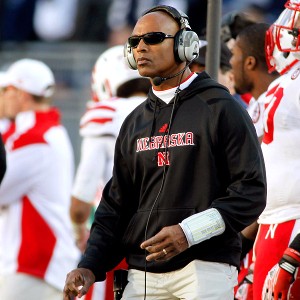
More on the Ron Brown's a flaming homophobe who has no place coaching, this time from Gene Wojciechowski on ESPN.com:
Let's say there is a gay running back on the Nebraska roster. And Ron Brown is his position coach.
Think about that for a moment. And then think about Brown's very public stance against homosexuality.
The Cornhuskers assistant coach recently testified in front of the Omaha (Neb.) City Council that gays, lesbians and transgender people shouldn't receive anti-discrimination protection under a proposed ordinance. He is considering testifying on May 7 in front of the Lincoln City Council, which will conduct a public hearing on proposed legislation that would prohibit discrimination on the basis of sexual orientation or gender identity.
None of this would matter if Brown were an ordinary citizen with an extraordinary belief in his interpretation of the Bible's position on homosexuality. That belief led him to compare the sponsors of the Omaha ordinance to Pontius Pilate and to tell The Associated Press "that based on the Bible, homosexuality, the lifestyle of homosexuality, is a sin."
But Brown isn't an ordinary citizen. He is a coach at a public university and for a revered football program whose reach stretches from Omaha to Scottsbluff. When he speaks, his words carry more power because of his association with Nebraska football.
It was no accident that when Brown spoke to the Omaha City Council he listed his address as Nebraska's Memorial Stadium. And there is no separation of church and state on Brown's Nebraska football office voice message:
"I praise the Lord Jesus Christ for today. I hope you're having a blessed day. Not able to answer my phone right now. Give me a try back and Lord willing, I'll get back to you as soon as possible. Have a great day."
Keep reading HERE.
Sunday, April 29, 2012
University of North Carolina discusses progress in the fight against homophobia in sport

CHAPEL HILL, N.C. -- College athletics is gradually becoming more inclusive for gay students. But if athletes are ever able to participate openly without fear of discrimination, it will require coaches and administrators to foster a holistically welcoming environment, from initial meetings with recruits to the halftime pep talks in the locker room.
"If" is the operative word.
On Saturday, here at the annual meeting of the University of North Carolina at Chapel Hill's College Sport Research Institute, a panel of gay athletes, administrators and researchers agreed that this progress is imminent. But they differed on how quickly it can happen.
Keep reading HERE.
Saturday, April 28, 2012
Profile of out coach Kirk Walker in Compete Magazine

Coach of the Women's Softball Program at Oregon State University for the last 18 years, according to the school, "Walker reigns as Oregon State's all-time winningest softball coach...."
He's not only an NCAA Coach at a PAC-12 school, he has also been a coach with the Amateur Softball Association (ASA), the 2004 Olympic USA
National Softball Team, the USA Elite Team for three summers, he's presented at a number of clinics and camps, been involved in publishing and video projects, and even been a co-owner of a softball school.
And what makes the story of this NCAA Division I coach all the more remarkable is that he is openly gay. To read the full story of how he came out, how he continues to serve as part of a larger support system, and how his parenting style has been influenced by his coaching experience, visit our website.
Find the profile in Compete Magazine HERE.
View Ohio State University panel on homophobia in sports

On Monday, April 16, I was proud to be involved in a panel discussion at the Ohio State University Moritz College of Law on the subject of “Homophobia in sports and developments in policies at the institutional level.”
The two panelists were phenomenal: Professor Erin Buzuvis, from the Western New England University School of Law (and co-founder of the Title IX Blog), and Brian Kitts, a co-founder of You Can Play.
The event was well attended by law students, faculty, and alumni.
For those that were unable to attend, the event was recorded and the video is now available online. I parsed the video into segments based on the topic of discussion for your convenience.
You can view the entire event (just over an hour) with one simple click by viewing this YouTube playlist or you can watch individual segments based on the subject you’re interested in by viewing the embedded videos below.
01 – Introductory Remarks (8:47)
02 – Gender Norms, Masculinity, and Homophobia (9:26)
03 – Homophobia in the Pros (5:14)
04 – ‘Negative Recruiting’: is it still a problem? (8:05)
05 – NFL/MLB/NBA protection for sexual orientation (3:48)
06 – Title IX: Does it protect LGBT athletes? (3:07)
07 – Importance of straight allies in sports (6:00)
08 – NCAA’s new policy for transgender athletes (5:29)
09 – The Media: leading the way or lagging behind? (5:51)
10 – How can coaches become better allies? (2:20)
11 – Support network for pro athletes to come out? (2:03)
Subscribe to:
Posts (Atom)