The idea for an official Federation of Gay Games conference came from Brenda Pitts, a professor specialized in sports marketing at Florida State University (now at Georgia State University). In 1985, Dr Pitts became interested in consulting research on the Gay Games, only to discover that almost none existed.
While attending the official conference of the Commonwealth Games in 1986, she had the idea that the Gay Games ought to offer something similar, and began working with the FGG to promote the first such conference, The timeframe for launching such a project for Gay Games III in 1990 proved too short, and so the first Gay Games conference was instead held in New York in 1994 the day before opening ceremonies for Gay Games IV. Some 23 speakers particpated at this event, which laid the groundwork for the larger conference organized at Gay Games V in Amsterdam.
It should be noted that participants in Gay Games IV could also take advantage of the ILGA world conference held that summer in New York, with both the Gay Games and the ILGA conference marking the 25th anniversary of the Stonewall riots.
Featured events
| 7-9 September 2012 Brussels Games Brussels ![]() Learn more HERE. | 26-28 October 2012 QueergamesBern Bern, Switzerland The success of the first edition of the QueergamesBern proved the need for an LGBT multisport event in Switzerland. This year will be even bigger, with badminton, bowling, running, walking, floorball. Learn more HERE. | 17-20 January 2013 Sin City Shootout Las Vegas ![]() Learn more HERE. | 13-16 June 2013 IGLFA Euro Cup Dublin ![]() Learn more HERE. |
Showing posts with label fggconference. Show all posts
Friday, May 4, 2012
A look back at 2006 FGG conference on Sport, Identity, Homosexuality and Homophobia
In conjunction with the 2006 FGG annual meeting, the FGG co-sponsored a two-day academic conference on "Sport, Identiy, Homosexuality, and Homophobia" in close collaboration with Philippe Liotard and the University of Lyon and the Centre for Research and Innovation in Sport (CRIS).
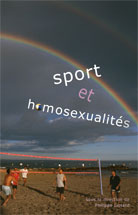
With participants from all over the world, papers were presented and discussed at the conference, the proceedings of which have since been published as Sport et homosexualités.
In 2011 the FGG was a partner for a follow-up conference held in Paris to examine progress made and challenges that remain.
With participants from all over the world, papers were presented and discussed at the conference, the proceedings of which have since been published as Sport et homosexualités.
In 2011 the FGG was a partner for a follow-up conference held in Paris to examine progress made and challenges that remain.
Amnesty International at Gay Games VIII in Cologne
(English below)
MERSI bei den Gay Games in Köln
Be part of it! – Das war das Motto der VIII. Gay Games, die dieses Jahr erstmals in Deutschland stattfanden. Auch wir von Mersi nahmen uns das zu Herzen und waren am Eröffnungssamstag (31.07.) mit einem Infostand in der Kölner Innenstadt präsent. In der Fußgängerzone zwischen Neumarkt und Rudolfplatz konnten wir eintauchen in die unbeschreibliche internationale Atmosphäre der queeren Sportwoche, sammelten Unterschriften für die Irak- und die Serbienpetition und ließen Solidaritätspostkarten für ugandische Menschenrechtsaktivist_innen unterzeichnen. Unterstützt wurden wir Mersi-Mitglieder aus Berlin und Köln von dem sehr engagierten Amnesty-Bezirksverband Köln. Bei einer Veranstaltung im Deutschen Sport- und Olympiamuseum am Rande der Ausstellung „Against the Rules“ sprachen wir mit Interessierten über die Herausforderungen der Menschenrechtsarbeit für Lesben, Schwule, Bisexuelle und Transgender. Wenn auch du aus dem Rheinland kommst und dich bei Mersi engagieren willst, bist du jederzeit willkommen.
koeln@mersi-amnesty.de
LGBT Human Rights Worldwide
When: Tuesday 08/03/2010
Location: Deutsches Sport & Olympia Museum
Free entrance
Every day all over this world, violations of Human Rights of Lesbians, Gays, Bisexuals and Transgender People (LGBT) are committed. These violations are very diverse and range from imprisonment, to torture and murder. Amnesty International has been working in this area for many years. At this event we hope to introduce YOU to our work. What are LGBT Human Rights? What is Amnesty International doing in the field? What can I do to support them? (The talk will be held in German.)
Beyond this event, Amnesty International was a guest at the Gay Games Village, where volunteers were in contact with the thousands of participants and visitors to Gay Games VIII.
MERSI bei den Gay Games in Köln
Be part of it! – Das war das Motto der VIII. Gay Games, die dieses Jahr erstmals in Deutschland stattfanden. Auch wir von Mersi nahmen uns das zu Herzen und waren am Eröffnungssamstag (31.07.) mit einem Infostand in der Kölner Innenstadt präsent. In der Fußgängerzone zwischen Neumarkt und Rudolfplatz konnten wir eintauchen in die unbeschreibliche internationale Atmosphäre der queeren Sportwoche, sammelten Unterschriften für die Irak- und die Serbienpetition und ließen Solidaritätspostkarten für ugandische Menschenrechtsaktivist_innen unterzeichnen. Unterstützt wurden wir Mersi-Mitglieder aus Berlin und Köln von dem sehr engagierten Amnesty-Bezirksverband Köln. Bei einer Veranstaltung im Deutschen Sport- und Olympiamuseum am Rande der Ausstellung „Against the Rules“ sprachen wir mit Interessierten über die Herausforderungen der Menschenrechtsarbeit für Lesben, Schwule, Bisexuelle und Transgender. Wenn auch du aus dem Rheinland kommst und dich bei Mersi engagieren willst, bist du jederzeit willkommen.
koeln@mersi-amnesty.de
LGBT Human Rights Worldwide
When: Tuesday 08/03/2010
Location: Deutsches Sport & Olympia Museum
Free entrance
Every day all over this world, violations of Human Rights of Lesbians, Gays, Bisexuals and Transgender People (LGBT) are committed. These violations are very diverse and range from imprisonment, to torture and murder. Amnesty International has been working in this area for many years. At this event we hope to introduce YOU to our work. What are LGBT Human Rights? What is Amnesty International doing in the field? What can I do to support them? (The talk will be held in German.)
Beyond this event, Amnesty International was a guest at the Gay Games Village, where volunteers were in contact with the thousands of participants and visitors to Gay Games VIII.
Libellés :
amnesty international,
blog-de,
conference,
fggconference,
ggviii,
human rights
A look back at Gay Games VII "Sports Equality Day" workshops
Chicago 2006 Gay Games Announces “Sports Equality Day” – 14 July 2006
CHICAGO, IL –
Chicago, IL - Chicago Games, Inc (CGI), the host organization of Gay Games VII, the Federation of Gay Games (FGG), and the Gay and Lesbian Athletic Foundation (GLAF) announced today a partnership to organize a series of workshops and educational seminars on issues of gays, lesbians, bisexual and transgender people in sports. The workshops will be held in conjunction with the 2006 Gay Games that takes place in Chicago from 15-22 July.
With an overall title "Sports Equality Day," the workshops will focus primarily on aspects of sports for younger and collegiate LGBT athletes, and the state of the LGBT sports movement in areas of the world with relatively large potential for development.
"GLAF is honored to be selected as a preferred partner organization of the FGG and the upcoming Chicago Gay Games 2006,” said O. Mac Chinsomboon, Executive Director of GLAF. “From our inception, the FGG has supported GLAF in our mission to create equality on the playing field. The FGG has been a sponsor of past GLAF forums, where intellectual discussion, debate and education have provided valuable networking opportunities among athletes in Olympic, professional, amateur, recreational, collegiate, and high school athletics communities."
In 2003 and 2004, GLAF organized two very successful conferences at the Massachusetts Institute of Technology about the issues of gays and lesbians in sports, and FGG officials said working with GLAF representatives again for 2006 will advance these issues further.
"This kind of partnership between a Gay Games host and another organization like GLAF is precisely what the FGG advocates in our position paper ‘The Image of the Gay Games’ that we published in 2003," said Roberto Mantaci, co-president of the FGG. "There are a lot of existing groups like GLAF that can play a valuable role in the success of the Gay Games and this is an effective way for them to do so in Chicago."
"With thousands of LGBT athletes as well as other individuals interested in the LGBT sports movement converging in Chicago during the week of the Gay Games, CGI is pleased to provide the opportunity for such a forum," said Suzi Arnold, co-chair of CGI. "We will also add new features to the Gay Games VII on-line registration system to include registration for the workshops."
CGI is in close partnership with several area universities offering logistical support through use of their facilities and assistance tapping into the many local youth and collegiate LGBT programs. These universities are expected to play a key support role for the "Sports Equality Day" workshops.
"The Gay Games started the LGBT sports movement, which is now a topic of research of many scholars working in the fields of sociology, philosophy and other human sciences," said Philippe Liotard, associate professor at the University of Lyon, France. Mr. Liotard is one of several researchers and academicians who will participate on the steering committee for the workshops. He said, "I look forward to being in Chicago during the week of the Gay Games to deepen my research and have the opportunity to meet with other colleagues to discuss our work in similar areas."
Program
GLAF/FGG/Chicago has established a Chicago GLAF Steering Committee that has been designated to organize a series of workshops and educational seminars on issues of gays, lesbians, bisexual and trangender people in sports, to be held in conjunction with the 2006 Gay Games that takes place in Chicago from 15-22 July. These educational seminars and workshops will take place on a day dubbed “Sports Equality Day”, Friday, July 14 2006, a day prior to opening ceremonies.
The seminars will focus primarily on aspects of sports for younger and collegiate LGBT athletes and the state of the LGBT sports movement in areas of the world with relatively large potential for development.
“GLAF is honored to be selected as a preferred partner organization of the FGG and upcoming Chicago Gay Games 2006”, said O. Mac Chinsomboon, Executive Director of GLAF. “From our inception, the FGG has supported GLAF on our mission to create equality on the playing field, and as a sponsor of GLAF forums for intellectual discussion, debate, education, and networking among athletes in Olympic, professional, amateur, recreational, collegiate, and high school athletics communities.”
PROGRAMMING
10:30am Registration
10:45am - 12 noon
Youth sports: Not what your parents were thinking of, or is it?
Panelists: Bridget White, Head Volleyball Coach, Kean University, Dave Lohse, Associate Athletic Communications Director, University of North Carolina
This workshop will explore today's meaning of "Sport" and "LGBT Sport." Ever since the founding of the Gay Games, there are now several generations of participants at the games. There exist many leagues that have traditionally been defined as gay but also have a growing number of non-gay players. These are friends of the LGBT people, friends of friends, athletes that like to compete in a non-discriminating environment free of any bias, and just people looking for good old-fashioned competition. At the high school and collegiate levels, the needs of our youth are different, though there are still many challenges. Are the needs of the today's young athletes the same as those for that have been involved with the initial movement? This panel will discuss the new reality as it exists for all of us in sport. We'll explore several generations including high school, Collegiate, Olympic, professional, and recreational sport genres.
We'll also touch upon questions such as: Does sport build character? As a young athlete that's LGBT, how do I compete? How can a youth sport coach become a true mentor? How can my son and daughter get the most out of their sport experience? Can sport be created in a manner that promotes positive youth development? What about human resources for professional sports leagues -- do they handle it at all? Come network and share ideas with the leading sport psychology and youth development experts in the world. Whether you're a parent, student, sport psychologist, educator, coach, researcher, community leader, or youth development specialist, you will find plenty of valuable information, while enjoying interactive presentations.
12:30pm-1pm
Keynote/Q&A with Esera Tuaolo
Born of Samoan descent in Hawaii, Tuaolo was quick, 280-pound (127-kilo) defensive tackle, playing for nine years in the National Football League for the Green Bay Packers, Minnesota Vikings and Atlanta Falcons. He played in the Super Bowl in 1998. He retired from the NFL in 1999 and came out in late 2002, bcoming a prominent spokesperson for numerous LGBT causes. In 2003 he spoke to nearly 200 NFL employees in New York on the topic of being a gay man in sports. Esera was the first player to perform the national anthem at a nationally televised football game, and he released a CD, First Christmas, in 2004. He is a Gay Games ambassador and he will sing at the Opening Ceremony at Soldier Field.
1pm-1:30pm
Keynote/QA with Leigh-Ann Nadoo
Naidoo is the first member of the Gay Games Ambassador program from Africa. She lives in Cape Town, South Africa, after a short time living in Chicago with her partner. In 2004 she was a member of the first African team to compete in beach volleyball at the Olympic Games. Her father, Derrick, was president of South Africa's first non-racial volleyball organization. Before beach volleyball, she competed in athletics (javelin, shot put and discus), tennis, soccer and softball.
1:45pm- 3:00pm
Where in the World is Sport?
In many places around the world, the LGBT movement (perceived or otherwise) is light years ahead of other countries. There's pro-LGBT in many western European countries and in the United States, yet often times there's still a backlash in very specific communities in these countries. Is the United States as progressive as many think? What about other parts of the world like Africa or South America, and elsewhere? Is the LGBT sports movement in outreach countries just "some years behind"? Can LGBT sport movement in these countries just look at the example of North American and European groups? Or is it the context so different that adjustments in the strategy of development of LGBT sports are necessary? How can we best foster the development of LGBT sport in this countries? Money or knowledge and expertise? And if money, is the allocation of scholarships to individuals to help them participate in a Gay Games (or other event) the best way to help? Or should this money be rather donated to local groups to realize local projects?
3:15pm-4:30pm
It Takes A Team! Educational Campaign for Lesbian, Gay, Bisexual and Transgender Issues in Sport
Lindsey Cardin, Women in Sports Foundation
The Women's Sports Foundation is committed to creating an athletic climate that is respectful and safe for all people and eliminating barriers to all girls being active and healthy. It Takes A Team! is an education project focused on eliminating homophobia as a barrier to all women and men participating in sport. Lindsey Cardin is the Project Coordinator at the Women's Sports Foundation. She will go through a training session discussing topics such as teammates dating, negative recruiting, LGBT athletes and coaches in the locker room, and sexual harassment.
CHICAGO, IL –
Chicago, IL - Chicago Games, Inc (CGI), the host organization of Gay Games VII, the Federation of Gay Games (FGG), and the Gay and Lesbian Athletic Foundation (GLAF) announced today a partnership to organize a series of workshops and educational seminars on issues of gays, lesbians, bisexual and transgender people in sports. The workshops will be held in conjunction with the 2006 Gay Games that takes place in Chicago from 15-22 July.
With an overall title "Sports Equality Day," the workshops will focus primarily on aspects of sports for younger and collegiate LGBT athletes, and the state of the LGBT sports movement in areas of the world with relatively large potential for development.
"GLAF is honored to be selected as a preferred partner organization of the FGG and the upcoming Chicago Gay Games 2006,” said O. Mac Chinsomboon, Executive Director of GLAF. “From our inception, the FGG has supported GLAF in our mission to create equality on the playing field. The FGG has been a sponsor of past GLAF forums, where intellectual discussion, debate and education have provided valuable networking opportunities among athletes in Olympic, professional, amateur, recreational, collegiate, and high school athletics communities."
In 2003 and 2004, GLAF organized two very successful conferences at the Massachusetts Institute of Technology about the issues of gays and lesbians in sports, and FGG officials said working with GLAF representatives again for 2006 will advance these issues further.
"This kind of partnership between a Gay Games host and another organization like GLAF is precisely what the FGG advocates in our position paper ‘The Image of the Gay Games’ that we published in 2003," said Roberto Mantaci, co-president of the FGG. "There are a lot of existing groups like GLAF that can play a valuable role in the success of the Gay Games and this is an effective way for them to do so in Chicago."
"With thousands of LGBT athletes as well as other individuals interested in the LGBT sports movement converging in Chicago during the week of the Gay Games, CGI is pleased to provide the opportunity for such a forum," said Suzi Arnold, co-chair of CGI. "We will also add new features to the Gay Games VII on-line registration system to include registration for the workshops."
CGI is in close partnership with several area universities offering logistical support through use of their facilities and assistance tapping into the many local youth and collegiate LGBT programs. These universities are expected to play a key support role for the "Sports Equality Day" workshops.
"The Gay Games started the LGBT sports movement, which is now a topic of research of many scholars working in the fields of sociology, philosophy and other human sciences," said Philippe Liotard, associate professor at the University of Lyon, France. Mr. Liotard is one of several researchers and academicians who will participate on the steering committee for the workshops. He said, "I look forward to being in Chicago during the week of the Gay Games to deepen my research and have the opportunity to meet with other colleagues to discuss our work in similar areas."
Program
GLAF/FGG/Chicago has established a Chicago GLAF Steering Committee that has been designated to organize a series of workshops and educational seminars on issues of gays, lesbians, bisexual and trangender people in sports, to be held in conjunction with the 2006 Gay Games that takes place in Chicago from 15-22 July. These educational seminars and workshops will take place on a day dubbed “Sports Equality Day”, Friday, July 14 2006, a day prior to opening ceremonies.
The seminars will focus primarily on aspects of sports for younger and collegiate LGBT athletes and the state of the LGBT sports movement in areas of the world with relatively large potential for development.
“GLAF is honored to be selected as a preferred partner organization of the FGG and upcoming Chicago Gay Games 2006”, said O. Mac Chinsomboon, Executive Director of GLAF. “From our inception, the FGG has supported GLAF on our mission to create equality on the playing field, and as a sponsor of GLAF forums for intellectual discussion, debate, education, and networking among athletes in Olympic, professional, amateur, recreational, collegiate, and high school athletics communities.”
PROGRAMMING
10:30am Registration
10:45am - 12 noon
Youth sports: Not what your parents were thinking of, or is it?
Panelists: Bridget White, Head Volleyball Coach, Kean University, Dave Lohse, Associate Athletic Communications Director, University of North Carolina
This workshop will explore today's meaning of "Sport" and "LGBT Sport." Ever since the founding of the Gay Games, there are now several generations of participants at the games. There exist many leagues that have traditionally been defined as gay but also have a growing number of non-gay players. These are friends of the LGBT people, friends of friends, athletes that like to compete in a non-discriminating environment free of any bias, and just people looking for good old-fashioned competition. At the high school and collegiate levels, the needs of our youth are different, though there are still many challenges. Are the needs of the today's young athletes the same as those for that have been involved with the initial movement? This panel will discuss the new reality as it exists for all of us in sport. We'll explore several generations including high school, Collegiate, Olympic, professional, and recreational sport genres.
We'll also touch upon questions such as: Does sport build character? As a young athlete that's LGBT, how do I compete? How can a youth sport coach become a true mentor? How can my son and daughter get the most out of their sport experience? Can sport be created in a manner that promotes positive youth development? What about human resources for professional sports leagues -- do they handle it at all? Come network and share ideas with the leading sport psychology and youth development experts in the world. Whether you're a parent, student, sport psychologist, educator, coach, researcher, community leader, or youth development specialist, you will find plenty of valuable information, while enjoying interactive presentations.
12:30pm-1pm
Keynote/Q&A with Esera Tuaolo
Born of Samoan descent in Hawaii, Tuaolo was quick, 280-pound (127-kilo) defensive tackle, playing for nine years in the National Football League for the Green Bay Packers, Minnesota Vikings and Atlanta Falcons. He played in the Super Bowl in 1998. He retired from the NFL in 1999 and came out in late 2002, bcoming a prominent spokesperson for numerous LGBT causes. In 2003 he spoke to nearly 200 NFL employees in New York on the topic of being a gay man in sports. Esera was the first player to perform the national anthem at a nationally televised football game, and he released a CD, First Christmas, in 2004. He is a Gay Games ambassador and he will sing at the Opening Ceremony at Soldier Field.
1pm-1:30pm
Keynote/QA with Leigh-Ann Nadoo
Naidoo is the first member of the Gay Games Ambassador program from Africa. She lives in Cape Town, South Africa, after a short time living in Chicago with her partner. In 2004 she was a member of the first African team to compete in beach volleyball at the Olympic Games. Her father, Derrick, was president of South Africa's first non-racial volleyball organization. Before beach volleyball, she competed in athletics (javelin, shot put and discus), tennis, soccer and softball.
1:45pm- 3:00pm
Where in the World is Sport?
In many places around the world, the LGBT movement (perceived or otherwise) is light years ahead of other countries. There's pro-LGBT in many western European countries and in the United States, yet often times there's still a backlash in very specific communities in these countries. Is the United States as progressive as many think? What about other parts of the world like Africa or South America, and elsewhere? Is the LGBT sports movement in outreach countries just "some years behind"? Can LGBT sport movement in these countries just look at the example of North American and European groups? Or is it the context so different that adjustments in the strategy of development of LGBT sports are necessary? How can we best foster the development of LGBT sport in this countries? Money or knowledge and expertise? And if money, is the allocation of scholarships to individuals to help them participate in a Gay Games (or other event) the best way to help? Or should this money be rather donated to local groups to realize local projects?
3:15pm-4:30pm
It Takes A Team! Educational Campaign for Lesbian, Gay, Bisexual and Transgender Issues in Sport
Lindsey Cardin, Women in Sports Foundation
The Women's Sports Foundation is committed to creating an athletic climate that is respectful and safe for all people and eliminating barriers to all girls being active and healthy. It Takes A Team! is an education project focused on eliminating homophobia as a barrier to all women and men participating in sport. Lindsey Cardin is the Project Coordinator at the Women's Sports Foundation. She will go through a training session discussing topics such as teammates dating, negative recruiting, LGBT athletes and coaches in the locker room, and sexual harassment.
Libellés :
ambassadors,
conference,
esera tuaolo,
fggconference,
ggvii,
glaf,
human rights,
leigh ann naidoo
HIVOS on the impact of the Gay Games V international human rights conference on gay emancipation in developing countries
Hivos (Humanistisch Instituut voor Ontwikkelingssamenwerking) is a Dutch organization for development co-inspired by humanist values. Hivos provides financial and political support to over 800 partner organizations in over 30 countries in Africa, Latin America, Asia and Southeastern Europe. Along with these local organizations, Hivos seeks to contribute to a free, fair and sustainable world, where women and men have equal access to resources and opportunities for development. Hivos is convinced that if people have a fair chance, their possibilities are almost limitless. Hence the slogan "People unlimited ". An important guiding principle is to strengthen the social position of women, along with work in the area of HIV/AIDS.
From the HIVOS webpage on their gay emancipation policy:
In 1998, Hivos decided in association with Amnesty International to make it possible for activists from developing countries to participate in the international human rights conference of the Gay Games in Amsterdam. Their participation resulted in widespread publicity and a substantial increase in the number of activities in the field of gay emancipation in developing countries. It was the breakthrough needed to launch a true global gay emancipation movement, which until then had been dominated by Europe and the United States. It was also during this period that international gay emancipation started to appear on the agenda of national governments, including in the Netherlands.
From the HIVOS webpage on their gay emancipation policy:
In 1998, Hivos decided in association with Amnesty International to make it possible for activists from developing countries to participate in the international human rights conference of the Gay Games in Amsterdam. Their participation resulted in widespread publicity and a substantial increase in the number of activities in the field of gay emancipation in developing countries. It was the breakthrough needed to launch a true global gay emancipation movement, which until then had been dominated by Europe and the United States. It was also during this period that international gay emancipation started to appear on the agenda of national governments, including in the Netherlands.
Libellés :
conference,
fggconference,
ggv,
HIVAIDS,
human rights
Download modules on LGBT education from Gay Games VI Amnesty International Global Rights Conference
From the website of the International Gay and Lesbian Human Rights Commission, the outcome of the Amnesty International Global Human Rights Conference at the Sydney Gay Games:
Teaching Human Rights &; Sexuality (Sydney Gay Games Modules 2002) - A training
10/10/2002
You can download PDF versions (links below) of the teaching modules authored by IGLHRC staff for the Amnesty International Global Rights Conference at the Sydney Gay Games, Australia, October 2002.
Teaching Human Rights &; Sexuality (Sydney Gay Games Modules 2002) - A training
10/10/2002
You can download PDF versions (links below) of the teaching modules authored by IGLHRC staff for the Amnesty International Global Rights Conference at the Sydney Gay Games, Australia, October 2002.
Libellés :
amnesty international,
conference,
fggconference,
ggvi,
human rights
A look back at Gay Games V human rights workshop
From the website of the Global Alliance for LGBT Education, created at Gay Games V, Amsterdam, 1998:
In 1998, Amnesty International and HIVOS organized a human rights conference alongside the Gay Games in Amsterdam. Empowerment Lifestyle Services was asked to organize a workshop on education against homophobia. This was the first global workshop on this theme.
Participants
The workshop had 5 speakers and was attended by about 20 people from every continent. The speakers were Toni Reis from Brazil, Alan Segal from Canada, Anna Leah Sarabia from the Philippines, XXX from South Africa and Peter Dankmeijer from the Netherlands.
Challenges
When Empowerment organized the workshop, it became obvious there were some basic challenges when discussing education about LGBT issues across cultures. The first question of the invited speakers was: what do you mean by “education”. This was a very valid question. Are we talking about formal education (schools, training) or informal education (learning on the spot, theme sessions)? Which kinds of schools or other formal education are we talking about? Which kinds of target groups: children, teenagers, heterosexuals, LGBT constituencies, professionals? For the sake of the workshop, Empowerment decided to focus on education of heterosexual young people in order to combat homophobia, especially in schools.
Differences and similarities
During the workshop, it became clear educational work differs in some ways, but it resembles in other ways. The divergences seemed to be mainly due to social and political contexts, which determined access to the school system and to young people. In a more conservative context, it is more difficult to get access.
But once educators have access, the discussions they have with young people seem to be very similar all over the world. Most young people are surprised and ask lots of (the same basic) questions. Some are afraid and angry; those kids and their often fundamentalist religious parents pose the biggest challenge for educators.
Recommendation
The recommendation of this workshop was to create a global network for exchange and to raise the quality of the work. This would be especially useful for the exchange of best practices on how to discuss homophobia and heteronormativity.
In 1998, Amnesty International and HIVOS organized a human rights conference alongside the Gay Games in Amsterdam. Empowerment Lifestyle Services was asked to organize a workshop on education against homophobia. This was the first global workshop on this theme.
Participants
The workshop had 5 speakers and was attended by about 20 people from every continent. The speakers were Toni Reis from Brazil, Alan Segal from Canada, Anna Leah Sarabia from the Philippines, XXX from South Africa and Peter Dankmeijer from the Netherlands.
Challenges
When Empowerment organized the workshop, it became obvious there were some basic challenges when discussing education about LGBT issues across cultures. The first question of the invited speakers was: what do you mean by “education”. This was a very valid question. Are we talking about formal education (schools, training) or informal education (learning on the spot, theme sessions)? Which kinds of schools or other formal education are we talking about? Which kinds of target groups: children, teenagers, heterosexuals, LGBT constituencies, professionals? For the sake of the workshop, Empowerment decided to focus on education of heterosexual young people in order to combat homophobia, especially in schools.
Differences and similarities
During the workshop, it became clear educational work differs in some ways, but it resembles in other ways. The divergences seemed to be mainly due to social and political contexts, which determined access to the school system and to young people. In a more conservative context, it is more difficult to get access.
But once educators have access, the discussions they have with young people seem to be very similar all over the world. Most young people are surprised and ask lots of (the same basic) questions. Some are afraid and angry; those kids and their often fundamentalist religious parents pose the biggest challenge for educators.
Recommendation
The recommendation of this workshop was to create a global network for exchange and to raise the quality of the work. This would be especially useful for the exchange of best practices on how to discuss homophobia and heteronormativity.
Libellés :
conference,
fggconference,
ggv,
human rights
Subscribe to:
Posts (Atom)